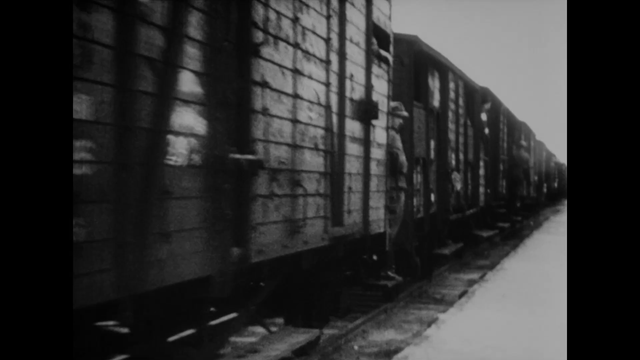
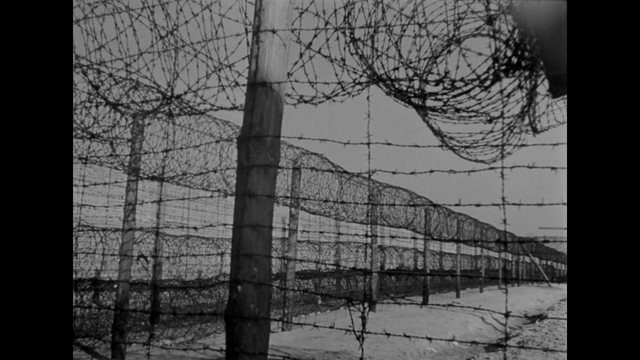
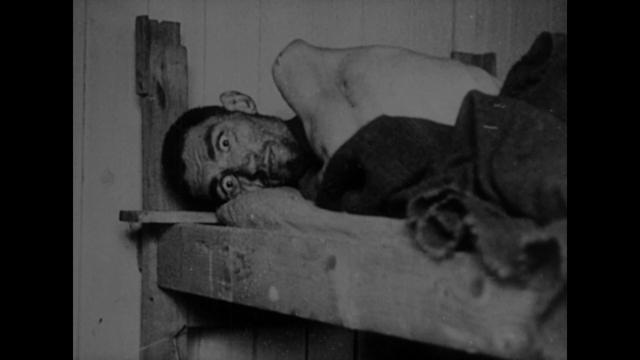
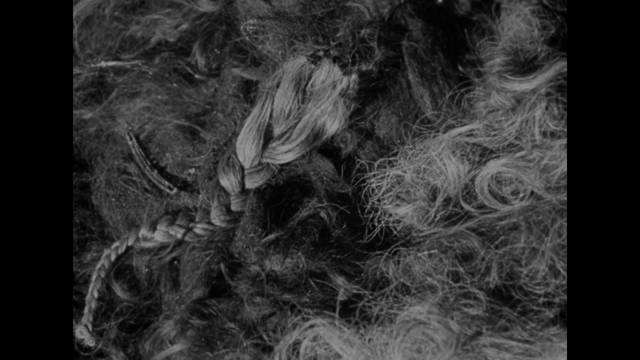
I Was A Capo 1963 POL SUB ENG, POL 1080p WEB-DL x264
INFO HASH: DE16B57F1443298B174C6CF385DDFF5DDEED1ECE

Year: 1963
Country: Poland
Director: Tadeusz Jaworski
IMDB: Link
Language : Polish
Subtitles : English, Polish

Prisoner functionaries (Funktionshäftlinge) were concentration camp prisoners assigned to supervisory or administrative positions in the camps.
Kapos are the best known type of prisoner functionary. They oversaw prisoners on work details. However, there were many functionary positions. These included camp elders (Lagerältesten), block elders (Blockältesten), and clerks (Schreiber), among others.
All prisoner functionaries were part of a standardized camp administrative structure. Above them was the SS camp administration and guards, and below them were fellow prisoners. Prisoner functionaries were essential to the smooth functioning of day-to-day camp operations.
Because of their position within the camps’ hierarchies, prisoner functionaries had a great deal of power over other prisoners. The functionaries at the top of the hierarchy could impose certain punishments. They could also bestow rewards on their fellow prisoners or even, in some cases, secretly help them. Functionaries had privileges that other prisoners did not.
The SS created the system of prisoner functionaries primarily to save German manpower, money, and resources. The system also undermined prisoner solidarity and discouraged resistance. This system is often referred to as self-administration (Selbstverwaltung). However, this is a misleading label, because the prisoners did not have direct control over who was a functionary.
The prisoner functionary system began at the Dachau concentration camp in the 1930s. As the SS created more concentration camps, they often moved experienced prisoner functionaries from more established camps to newer ones.
Prisoner functionaries supervised various areas and activities. These included living barracks, work details, the infirmary, the kitchens, and administrative offices. Prisoner functionaries had different job titles, which indicated their position and duties.
The camp elders (Lagerältesten) were the highest ranking prisoner functionaries. The word “elder” indicated a supervisory position, not the prisoner’s age. Camp elders were responsible for making sure the camp as a whole ran smoothly. They reported to the SS officer responsible for the camp (called the Schutzhaftlagerführer).
Block elders (Blockältesten) were in charge of living barracks. In camp terminology, the living barracks were called blocks. Block elders controlled where the prisoners in their block slept and the order in which they received food. They could reward prisoners with better or more provisions. They could also discipline them for breaking camp rules, arbitrarily beat them, or punish them without cause. Within the prisoner functionary hierarchy, block elders reported to the camp elders. They oversaw room orderlies (Stubendienste or Stubenälteste).
A low-ranking SS officer, called an SS block leader (Blockführer), made sure that the block elders carried out their duties.
Kapos oversaw their fellow prisoners on forced labor assignments. Unlike the terms for other prisoner functionaries, the word “kapo” is not a German word. The exact origin of the term “kapo” is unknown, though it is clear that it was already used at Dachau.
Kapos guarded and supervised concentration camp prisoners who were performing forced labor. Some kapos supervised forced labor inside the camp itself. They oversaw work crews (Kommandos) in camp kitchens, laundry facilities, workshops, and infirmaries. Other kapos supervised prisoners who performed forced labor outside of the camp. Worksites included construction sites, quarries, farms, fisheries, and factories.
The kapos were responsible for making sure prisoners did their work, met their quotas, and did not slack off. The SS expected kapos to use physical force and violence to discipline those who fell short of expectations.
Some large work details (1,000+ forced laborers) were led by an Oberkapo (“upper kapo”). Oberkapos oversaw kapos and other prisoner functionaries, including Unterkapos (“under kapos”) and Vorarbeiter (“lead workers”).
In addition to camp elders, block elders, and kapos, there were a number of other prisoner functionary positions. Clerks (Schreiber) were responsible for recordkeeping and administrative tasks. Prisoner doctors (Häftlingsärtzen) and nurses (Häftlingspflegeren) were assigned to work in the infirmaries (Krankenrevieren). During World War II, some camps had a prisoner police force (Lagerpolizei or Lagerschutz) due to manpower shortages among the SS guards.
Prisoner functionaries came from all categories of concentration camp prisoners. They included people of various nationalities, and both men and women. The composition of prisoner functionaries varied from camp to camp, just as the prisoner population did. However, German prisoners (from Germany and its annexed territories) dominated the prisoner functionary hierarchies of most concentration camps. This was the case even in camps with largely non-German prisoner populations, such as Stutthof and Riga-Kaiserwald.
The most notorious prisoner functionaries were people imprisoned as professional criminals. Other functionaries were imprisoned as “asocials,” political prisoners, and Jews.
Within the context of a concentration camp, prisoner functionaries were relatively privileged compared to other prisoners. They often had many advantages that others did not, including:
. better accommodations, food, and clothing;
. access to luxury goods, like alcohol and cigarettes;
. access to information about camp news;
. less physically demanding work; and
. the ability to avoid physical harm.
These privileges often helped improve prisoner functionaries' chances of survival. It was in their best interest to keep their position in order to retain these benefits
Prisoner functionaries had some discretion in how they used their power and treated their fellow prisoners. There are many examples of prisoner functionaries who abused their power and made life worse for other prisoners. However, there were also prisoner functionaries who helped prisoners to survive.
Many prisoner functionaries created systems of beneficiaries among their fellow prisoners. These were often mutually beneficial relationships. The functionaries could help prisoners get better work positions, more food, or other benefits. In return, these prisoners helped the functionaries with small tasks. Typically, these networks formed between people of the same prisoner category or nationality. For instance, Communist political prisoners tended to form networks with other Communist political prisoners.
Prisoner functionaries were often aware of the latest camp information. As a result, they could serve important roles in camp resistance movements. They could also provide the resistance with access to resources. In several camps, including Buchenwald and Auschwitz, prisoner functionaries were a central part of resistance efforts.
Some prisoner functionaries helped protect and care for their fellow prisoners. Clerks, doctors, and nurses are often remembered for small or great acts of kindness.
For example, clerks could choose to record an incoming prisoner's personal details in such a way that helped improve that person’s chance of survival. They could falsify a person’s age to fall within the age range considered suitable for forced labor. Clerks could also register prisoners as having a skill or profession useful in the camp.
Despite the complete lack of sanitation, medicine, and supplies, prisoner doctors and nurses attempted to provide medical care to ill or injured prisoners. They tried to find ways to alleviate suffering and save those whom they could without running afoul of SS orders.
For kapos and block elders, beating and punishing subordinate prisoners was a required duty. Interpersonal violence was a regular part of camp life. The SS demanded it. Most prisoner functionaries met SS expectations. They beat prisoners who stepped out of line or could not do their jobs.
Some prisoner functionaries became infamous for their sadistic cruelty. Several carried around whips or sticks, which they used on prisoners under their supervision. There are many instances of prisoner functionaries murdering other prisoners as part of their official duties. There are also numerous examples of functionaries sexually abusing and assaulting prisoners.
In the aftermath of World War II, a small percentage of prisoner functionaries were punished. Sometimes there were direct confrontations between former functionaries and the prisoners who had witnessed their conduct. In a number of these cases, former prisoners killed prisoner functionaries in extralegal acts of revenge. In other cases, former prisoners identified prisoner functionaries to the Allied powers or other authorities. Some of these people were tried in war crimes trials by Allied military tribunals and European and Israeli courts. They were often tried alongside their former SS guards. Not all of the prisoner functionaries who were tried were convicted.
Kapos and other prisoner functionaries often appear in survivor memoirs and testimonies. Many survivors describe the range of behavior they experienced from prisoner functionaries. They recount stories of abuse and murder, but also aid and rescue. In his well-known memoir Night, Elie Wiesel documents how a kapo abused him at Auschwitz.
In an essay called “The Grey Zone,” Auschwitz survivor Primo Levi describes how prisoner functionaries existed in a morally ambiguous zone. He notes,
The network of human relations inside the Lagers [camps] was not simple: it could not be reduced to two blocs of victims and persecutors… The hybrid class of prisoner functionaries… is a grey zone, with ill-defined outlines which both separate and join the two camps of masters and servants.
In his essay, Levi cautions against morally judging the behavior of people in such extreme coercive circumstances. He reminds readers that “the greatest responsibility lies with the system, the very structure of the totalitarian state.”
In the Nazi concentration camp system, all prisoners—including prisoner functionaries—were subjected to degradation, dehumanization, and extreme cruelty. In the face of this inhumanity, many were simply trying to survive.

[ About file ]
Name: I Was A Capo.Tadeusz Jaworski.1963.WEB-DL.mkv
Date: Wed, 02 Sep 2026 19:57:05 +0200
Size: 797,178,234 bytes (760.248407 MiB)
[ Magic ]
File type: Matroska data
File type: EBML file, creator matroska
[ Generic infos ]
Duration: 00:26:09 (1569.301 s)
Container: matroska
Production date: Tue, 23 Nov 2021 09:21:32 +0200
Total tracks: 4
Track nr. 1: video (V_MPEG4/ISO/AVC) {und}
Track nr. 2: audio (A_AAC) {pol}
Track nr. 3: subtitle (S_TEXT/UTF8) {eng}
Track nr. 4: subtitle (S_TEXT/UTF8) {pol}
Muxing library: libebml v1.4.2 + libmatroska v1.6.4
Writing application: mkvmerge v63.0.0 ('Everything') 64-bit
[ Relevant data ]
Resolution: 1920 x 1080
Width: multiple of 32
Height: multiple of 8
Average DRF: 25.916318
Standard deviation: 3.494506
Std. dev. weighted mean: 2.537829
[ Video track ]
Codec ID: V_MPEG4/ISO/AVC
Resolution: 1920 x 1080
Frame aspect ratio: 16:9 = 1.777778
Pixel aspect ratio: 1:1 = 1
Display aspect ratio: 16:9 = 1.777778
Framerate: 25 fps
Stream size: 776,362,648 bytes (740.397118 MiB)
Duration (bs): 00:26:09 (1569.28 s)
Bitrate (bs): 3957.803059 kbps
Qf: 0.076347
[ Audio track ]
Codec ID: A_AAC
Sampling frequency: 48000 Hz
Channels: 2
Stream size: 20,274,977 bytes (19.335725 MiB)
Bitstream type (bs): AAC LC (Low Complexity)
Frames (bs): 73,561
Duration (bs): 00:26:09 (1569.301333 s)
Chunk-aligned (bs): Yes
Bitrate (bs): 103.35798 kbps VBR
Sampling frequency (bs): 48000 Hz
Mode (bs): 2: front-left, front-right
[ Video bitstream ]
Bitstream type: MPEG-4 Part 10
SPS id: 0
Profile: High@L4
Num ref frames: 2
Aspect ratio: Square pixels
Chroma format: YUV 4:2:0
PPS id: 0 (SPS: 0)
Entropy coding type: CABAC
Weighted prediction: No
Weighted bipred idc: No
8x8dct: Yes
Total frames: 39,232
Drop/delay frames: 0
Corrupt frames: 0
P-slices: 13339 ( 34.000 %) #######
B-slices: 25108 ( 63.999 %) #############
I-slices: 785 ( 2.001 %)
SP-slices: 0 ( 0.000 %)
SI-slices: 0 ( 0.000 %)
[ DRF analysis ]
average DRF: 25.916318
standard deviation: 3.494506
max DRF: 34
DRF<12: 0 ( 0.000 %)
DRF=12: 30 ( 0.076 %)
DRF=13: 4 ( 0.010 %)
DRF=14: 30 ( 0.076 %)
DRF=15: 515 ( 1.313 %)
DRF=16: 53 ( 0.135 %)
DRF=17: 193 ( 0.492 %)
DRF=18: 845 ( 2.154 %)
DRF=19: 250 ( 0.637 %)
DRF=20: 486 ( 1.239 %)
DRF=21: 1513 ( 3.857 %) #
DRF=22: 2753 ( 7.017 %) #
DRF=23: 3108 ( 7.922 %) ##
DRF=24: 3253 ( 8.292 %) ##
DRF=25: 2758 ( 7.030 %) #
DRF=26: 3119 ( 7.950 %) ##
DRF=27: 4394 ( 11.200 %) ##
DRF=28: 5353 ( 13.644 %) ###
DRF=29: 5091 ( 12.977 %) ###
DRF=30: 3925 ( 10.005 %) ##
DRF=31: 1420 ( 3.619 %) #
DRF=32: 84 ( 0.214 %)
DRF=33: 45 ( 0.115 %)
DRF=34: 10 ( 0.025 %)
DRF>34: 0 ( 0.000 %)
P-slices average DRF: 22.69338
P-slices std. deviation: 2.302356
P-slices max DRF: 30
B-slices average DRF: 27.712721
B-slices std. deviation: 2.654744
B-slices max DRF: 34
I-slices average DRF: 23.224204
I-slices std. deviation: 2.799577
I-slices max DRF: 28
This report was created by AVInaptic (01-11-2020) on 3-09-2026 11:05:48