The Lesson 2020 DEU SUB ENG 720p WEB-DL x264
Downloads: 40068
Last checked: Jul. 20th '26
Date uploaded: Jul. 20th '26
Seeders: 22337
Leechers: 8147
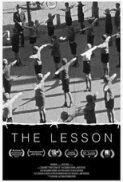
The Lesson
Documentary
German schools mandate that students learn about National Socialism and its devastating impact on the country and the world, and this hour-long vérité doc follows four students over five years as they engage with lessons about the Nazi era and the Holocaust.
INFO HASH: C218AFEB4AA3435A17E88105A8732FEBC499C1DD

Year: 2020
Country: Germany, United Kingdom
Director: Elena Horn
IMDB: Link
Language : German
Subtitles : English

Given the predominance of what could be called "cultural Nietzscheanism"—a predominance which today unites Foucauldians with the followers of Jordan Peterson—Monville's 2007 work represents a provocative honoring of what Left Nietzscheans might call "the will to difference." Monville's book traces the specifically French history of twentieth-century Nietzschean reception, from the far right to the New Left. It starts with the pre- and interwar years during which the German thinker was celebrated by the ultranationalist right wing of the Action française. We proceed chronologically via the postwar moment, in which Nietzsche was rehabilitated by Maurice Blanchot, Bataille, and Albert Camus, then celebrated by heroes of the poststructuralist generation such as Gilles Deleuze and Michel Foucault, to arrive at contemporary French figures, such as Michel Onfray and Philippe Sollers. Nevertheless, given the global reception of "French theory" in literature, cultural studies, and philosophical academic circles since the late 1970s, Monville's study has international relevance, which makes its lack of translation to date into English all the more unfortunate.
Monville's critique is written from an avowedly Marxian perspective, which may go some way in explaining this reception, given the opposition that Left Nietzscheanism poses to the older or "socialist" Left, predating the libertarian turn of the 1960s and '70s. Monville is the French translator of Georg Lukács's classic work on the intellectual antecedents of fascism, The Destruction of Reason. The latter's depiction of Nietzsche as a father of imperialist-era "irrationalism," Misère rightly notes, has always been among the first targets of Left Nietzscheanism, or nietzchéisme de gauche, starting with Blanchot and Bataille. Indeed, dismissing Lukács—usually without having read him—is almost a price of entry into the "new Nietzscheanism," as it was called in the 1970s for a time. Monville, by contrast, continues the Lukácsian project of resuscitating the "untimely" thinker in his own sociopolitical times. But he carries this mode of critical, historical-materialist reading through to the differing receptions of Nietzsche in France across the twentieth century. The work is carried out, therefore, under the aegis of the critique of ideology.
Monville proposes to read the texts of celebrated figures of the French high intelligentsia as not above their times, or outside of them. Indeed, he contends that their intellectual ascendancy in many fields has served a particular, and especially reactionary, political function: that of undermining the possibility of collective action against dominant political-economic powers by redirecting readers' dissatisfaction against the continuing problems of liberal-capitalism into forms of personal self-transformation, discrediting the modern postulate of the basic equality of all human beings underlying forms of democratic will formation, and destroying the credibility of any ideas of historical progress founded on reason and scientific culture.
Herein, we arrive at what is perhaps the heart of the paradoxical phenomenon of so-called Left Nietzscheanism on which Monville's book invites us to remark. From Blanchot onward, the phenomenon works by displacing leftist protest about concrete, inegalitarian social and material conditions, rooted in the organized collective social movements of working people, with refined forms of rebellion, removed from social and material conditions altogether, and carried out in a rarefied cultural, discursive, or "spiritual" realm. Meanwhile, the protagonists of this leftism are reframed as isolated, pseudo-aristocratic individuals fighting to preserve their dynamic, creative uniqueness against a leveling, still-too-egalitarian world.
At the same time as any reference to the category of justice disappears in this Nietzschean recasting of the post-socialist Left as "gauchist"—justice, alongside equality, socialism, and democracy itself, now being attributed to "slave morality"—violence passes from being a means of social change when other avenues are exhausted, to an aestheticized, even fetishized avatar of radical rupture or difference. As Monville puts it, in Left Nietzscheanism and its legatees, "the revolution" goes from being a political necessity to being "trendy." It is a festive, imagined event to be valued in itself—on the only condition that it fails, and produces no robust vision of what might happen the day after, let alone the prospect of a more rational, egalitarian sociopolitical dispensation, which could only restrict the creative prerogatives of the happy few. In this new field, Nietzsche's many avowals of the necessity for "hardness" and his celebrations of figures like Julius Caesar, Cesare Borgia, and Napoleon—the latter, for being as much "inhuman" as "overman"—are registered aesthetically, which is to say, "beyond good and evil." The unlimited violence of such tyrannical figures is a good deal more interesting, after all, than the prosaic concerns of the "masses," whom the older left had wished to organize and endow with agency.
The political prospects of such a nietzchéisme de gauche are ambivalent, at best, faced with the rise of far-right movements globally. At most, they redirect rebellious energies into what Lukács called the "grand hotel abyss": despairing withdrawal, elevated anti-demotic cynicism, and, today, a sense that Donald Trump, Viktor Orbán, and the like are hardly worse than the leveling society of the spectacle and its empty defenses of tainted "rights." Monville's concluding chapter on what he calls "behavioral pre-fascism" goes even further. He suggests that what we could call "cultural Nietzscheanism" is today hegemonic across popular, as well as refined, intellectual culture. As Sarah Kofman remarked as early as 1979: "Since Nietzsche et la philosophie by Gilles Deleuze which grants Nietzsche his key to the philosophical city…the works on Nietzsche have not ceased to multiply. All of modern philosophy reclaims Nietzsche, all of our culture 'lives' Nietzsche. Nietzsche even despite himself has become 'popular,' has been vulgarised by the mass media."
Monville identifies Nietzschean motifs in the sociology of the "risk society," as well as in the libertarian opposition to social welfare or workers' compensation—denounced as avatars of the "totalitarian" state. Above all, there are the endless "be yourself" and "just do it" celebrations of PR and mass marketing, which sync with the nomadic "flexibilization" of post-Fordist working conditions globalized since the 1970s crises. In contrast, Nietzschean scorn for the "masses," Monville observes, plays out in such a way that this pseudo-aristocratic motif affords the middle classes, increasingly threatened with socioeconomic obsolescence, the ongoing consolation of at least being able to scorn those still below them: "Each Western household is hence enjoined to contemplate, like the others, the object of its scorn (the immigrant, the African famine victim, the Asiatic victim of natural catastrophes).… Each person has their 'masses,' who will be at the same time their foil and the justification of their misery. ('How dare you complain when others, below you, are paid twenty times less than you?') Each individual becomes the lord of themselves and the slave of the ruling class."
For a book written in 2007, it has to be said that Monville's prognostications of the fascistizing direction where cultural Nietzscheanism and the wider state of liberal democracies was trending in the period of Nicolas Sarkozy and the "war on terror" read as disturbingly prescient:
The modern Nietzschean passes his existence in purchasing his right to existence, and first and foremost his body—the ultimate merchandise. The liberalization and deregulation of the most intimate sphere of the person—encouraged by Michel Onfray, who even asks us to "envisage openly" the question of eugenicism—will completely achieve the fetishism of the commodity. And the sole revolt which will from here on be permitted to the Nietzschean by power, when an irreducible part of his disarmed consciousness has, through misunderstanding, fomented some insurrection, will be total annihilation, bestiality towards the other animal which his masters will have brought into the neighbouring cage.
Indeed, although published in French in 2007, Monville's Misère du nietzschéisme de gauche remains every bit as timely in the 2020s as the far right waxes internationally and the neoliberal constellation enters into what seems like terminal crisis. If Monville is right, Nietzscheanism has acted as a kind of ideological "useful idiot." Without its progenitors always meaning to, Left Nietzscheanism has noisily helped to turn youthful dissent among the middle classes of the Global North away from political-economic concerns, and against any forms of collective, pro-egalitarian mobilization. Accordingly, the critique of the different forms of this cultural Nietzscheanism constitutes one small—but indispensable—part of fostering forms of democratic socialist opposition to both neoliberalism and the authoritarian monsters to which it is giving birth. (Matthew Sharpe)

[ About file ]
Name: The Lesson.Elena Horn.2020.AMZN.WEB-DL.SymBiOTes.mkv
Date: Mon, 06 Jul 2026 19:58:39 +0200
Size: 2,204,515,039 bytes (2102.389373 MiB)
[ Magic ]
File type: Matroska data
File type: EBML file, creator matroska
[ Generic infos ]
Duration: 01:00:10 (3609.984 s)
Container: matroska
Production date: Thu, 05 Dec 2024 22:27:10 +0200
Total tracks: 3
Track nr. 1: video (V_MPEG4/ISO/AVC) {und}
Track nr. 2: audio (A_EAC3) {ger}
Track nr. 3: subtitle (S_TEXT/UTF8) [SDH] {eng}
Muxing library: libebml v1.4.2 + libmatroska v1.6.3
Writing application: mkvmerge v65.0.0 ('Too Much') 64-bit
[ Relevant data ]
Resolution: 1280 x 720
Width: multiple of 32
Height: multiple of 16
Average DRF: 18.520183
Standard deviation: 4.298378
Std. dev. weighted mean: 4.280832
[ Video track ]
Codec ID: V_MPEG4/ISO/AVC
Resolution: 1280 x 720
Frame aspect ratio: 16:9 = 1.777778
Pixel aspect ratio: 1:1 = 1
Display aspect ratio: 16:9 = 1.777778
Framerate: 25 fps
Stream size: 2,102,514,647 bytes (2005.114219 MiB)
Duration (bs): 01:00:10 (3609.96 s)
Bitrate (bs): 4659.363864 kbps
Qf: 0.202229
[ Audio track ]
Codec ID: A_EAC3
Sampling frequency: 48000 Hz
Channels: 2
[ Video bitstream ]
Bitstream type: MPEG-4 Part 10
SPS id: 0
Profile: High@L3.1
Num ref frames: 4
Aspect ratio: Square pixels
Chroma format: YUV 4:2:0
PPS id: 0 (SPS: 0)
Entropy coding type: CABAC
Weighted prediction: P slices - explicit weighted prediction
Weighted bipred idc: B slices - implicit weighted prediction
8x8dct: Yes
Total frames: 90,249
Drop/delay frames: 0
Corrupt frames: 0
P-slices: 24954 ( 27.650 %) ######
B-slices: 63490 ( 70.350 %) ##############
I-slices: 1805 ( 2.000 %)
SP-slices: 0 ( 0.000 %)
SI-slices: 0 ( 0.000 %)
[ DRF analysis ]
average DRF: 18.520183
standard deviation: 4.298378
max DRF: 39
DRF<16: 0 ( 0.000 %)
DRF=16: 59107 ( 65.493 %) #############
DRF=17: 2706 ( 2.998 %) #
DRF=18: 2692 ( 2.983 %) #
DRF=19: 2178 ( 2.413 %)
DRF=20: 2125 ( 2.355 %)
DRF=21: 2220 ( 2.460 %)
DRF=22: 2404 ( 2.664 %) #
DRF=23: 2234 ( 2.475 %)
DRF=24: 2385 ( 2.643 %) #
DRF=25: 2118 ( 2.347 %)
DRF=26: 2153 ( 2.386 %)
DRF=27: 2027 ( 2.246 %)
DRF=28: 1868 ( 2.070 %)
DRF=29: 1346 ( 1.491 %)
DRF=30: 1042 ( 1.155 %)
DRF=31: 652 ( 0.722 %)
DRF=32: 459 ( 0.509 %)
DRF=33: 266 ( 0.295 %)
DRF=34: 144 ( 0.160 %)
DRF=35: 49 ( 0.054 %)
DRF=36: 43 ( 0.048 %)
DRF=37: 25 ( 0.028 %)
DRF=38: 5 ( 0.006 %)
DRF=39: 1 ( 0.001 %)
DRF>39: 0 ( 0.000 %)
P-slices average DRF: 18.119179
P-slices std. deviation: 4.008264
P-slices max DRF: 37
B-slices average DRF: 18.706127
B-slices std. deviation: 4.421274
B-slices max DRF: 39
I-slices average DRF: 17.523546
I-slices std. deviation: 3.109119
I-slices max DRF: 33
This report was created by AVInaptic (01-11-2020) on 20-07-2026 20:34:21



