Daisetz T. Suzuki - Collected Works on Zen Buddhism (41 books)
INFO HASH: A434DA633B3C330EC74A7A9A618BAB256816B4FD
* Daisetz T. Suzuki - Collected Works on Zen Buddhism (41 books)
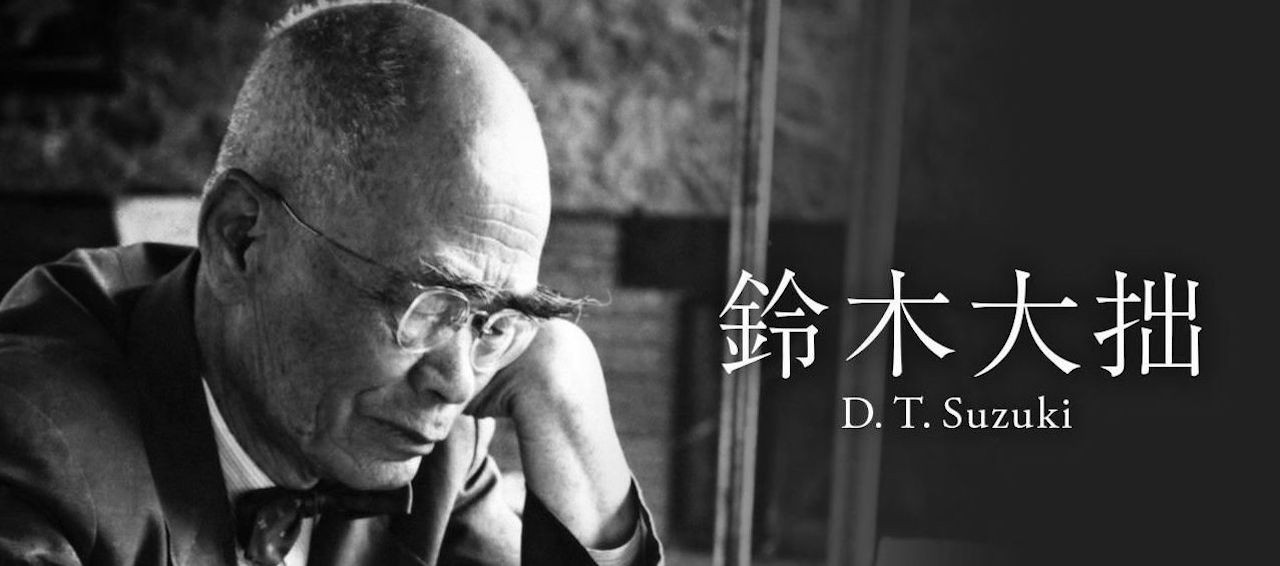
DAISETSU TEITARO SUZUKI (1870–1966) , self-rendered in 1894 as Daisetz, was a Japanese essayist, philosopher, religious scholar, and translator who stands as one of the most influential interpreters of Zen Buddhism for a modern, global audience. Writing at the intersection of religious studies, philosophy, and cultural criticism, Suzuki played a decisive role in shaping how Zen was understood in Europe and North America during the twentieth century, reframing Asian religious ideas within conceptual vocabularies familiar to modern philosophy, psychology, and comparative religion.
Suzuki was trained in the Rinzai Zen tradition in Japan and was deeply immersed in classical Buddhist texts, yet his intellectual formation was also shaped by Western thought. Early in his career, he worked with the German-American philosopher Paul Carus and translated important Buddhist works into English, including the TAO TE CHING and sections of the LANKAVATARA SUTRA . This dual fluency allowed Suzuki to present Zen not as a rigid doctrine or institutional religion, but as a direct, experiential insight into reality—an approach that resonated strongly with Western audiences seeking alternatives to dogmatic theology.
Among his most inflluential works are ESSAYS IN ZEN BUDDHISM (three series, published between 1927 and 1934), AN INTRODUCTION TO ZEN BUDDHISM (1934), and ZEN BUDDHISM AND ITS INFLUENCE ON JAPANESE CULTURE (1938). In these texts, Suzuki articulated Zen as a non-dual mode of awareness grounded in sudden awakening (satori), emphasizing intuition over rational analysis. He frequently contrasted Zen with Western rationalism, portraying it as a corrective to what he saw as the limitations of analytical thought. These writings became foundational texts for students of Zen outside East Asia and were especially influential among philosophers, theologians, artists, and psychologists.
Suzuki’s later works, such as MYSTICISM: CHRISTIAN AND BUDDHIST (1957), expanded his comparative project by placing Zen alongside Western mystical traditions. Here, he sought to identify a universal core of religious experience beneath doctrinal differences, arguing that Zen exemplified a particularly pure expression of mystical insight.
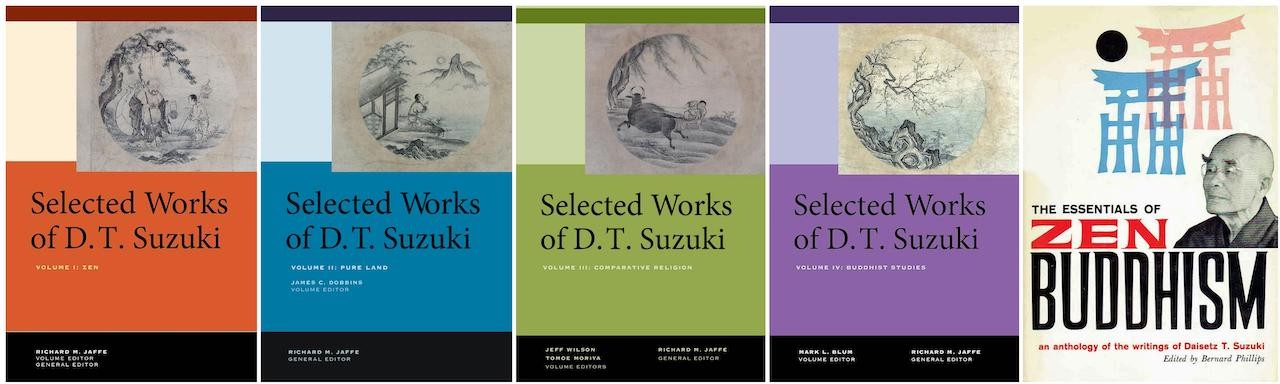
The four volumes of his SELECTED WORKS (2014–2021) present a comprehensive portrait of Suzuki as interpreter, comparative thinker, and Buddhist scholar. Volume I centers on Zen as a lived, experiential realization; Volume II reinterprets Pure Land Buddhism as an existential and non-dual religious path; Volume III situates Suzuki within comparative religion, tracing his engagement with Christianity and other traditions as he sought a universal core of religious experience, while Volume IV showcases his more technical contributions to Mahāyāna Buddhist studies through doctrinal, historical, and textual analysis.
Suzuki's writings opened unprecedented channels of cross-cultural understanding and decisively shaped modern conceptions of Zen, influencing figures ranging from Carl Jung to the Beat writers. At the same time, contemporary scholarship has questioned his essentialist and sometimes nationalistic framing of Zen. Engaging Suzuki, therefore, remains essential not only for understanding Zen’s global reception, but also for reflecting on the challenges of interpreting religious traditions across cultural and intellectual boundaries.
The following books are in PDF format unless otherwise noted:
* An Introduction to Zen Buddhism (Grove, 2007) – ePUB
* The Awakening of Zen [ed. Humphreys] (Shambhala, 2000)
* Brief History of Early Chinese Philosophy (Probsthain, 1914)
* Buddha of Infinite Light (Shambhala, 2013) – ePUB
* Collected Writings on Shin Buddhism (Shinshū Ōtaniha, 1973)
* Essays in Zen Buddhism (First Series) [ed. Humphreys] (Rider, 1958) – ePUB/PDF
* Essays in Zen Buddhism (Second Series) [ed. Humphreys] (Rider, 1958)
* Essays in Zen Buddhism (Third Series) [ed. Humphreys] (Rider, 1970)
* The Essentials of Zen Buddhism [ed. Phillips] (Dutton, 1962)
* The Field of Zen [ed. Humphreys] (Buddhist Society, 1980)
* Japanese Buddhism (Board of Tourist Industry, 1938)
* Japanese Spirituality [tr. Waddell] (JSPS, 1972)
* Living by Zen [ed. Humphreys] (Rider, 1982)
* Manual of Zen Buddhism (Grove, 2018) – ePUB
* Mysticism: Christian and Buddhist (Routledge, 2003)
* Mysticism: Christian and Buddhist (Unwin, 1988)
* On Indian Mahayana Buddhism [ed. Conze] (Harper & Row, 1968)
* Outlines of Mahayana Buddhism (Schocken, 1973)
* Selected Works, Vol. 1: Zen [ed. Jaffe] (California, 2014) – ePUB/PDF
* Selected Works, Vol. 2: Pure Land [ed. Dobbins] (California, 2015) – ePUB/PDF
* Selected Works, Vol. 3: Comparative Religion [ed. Wilson & Moriya] (California, 2016) – ePUB/PDF
* Selected Works, Vol. 4: Buddhist Studies [ed. Blum] (California, 2021) – ePUB/PDF
* Sengai: The Zen Master [ed. van Hoboken] (Faber, 1971)
* Shin Buddhism (Harper & Row, 1970)
* Studies in the Lankavatara Sutra (Routledge, 1975)
* Studies in Zen (Rider, 1955)
* Swedenborg: Buddha of the North (Swedenborg Foundation, 1996) – ePUB/PDF
* Training of the Zen Buddhist Monk (Tuttle, 1994) – ePUB/PDF
* Zen and Japanese Culture (Princeton, 2010)
* Zen Buddhism and Psychoanalysis (Harper & Row, 1970)
* Zen Buddhism: Selected Writings [ed. Barrett] (Three Leaves, 2006)
* Zen Doctrine of No-Mind [ed. Humphreys] (Weiser, 1972)
* Zen Koan as a Means of Attaining Enlightenment (Tuttle, 1994) – ePUB
== TRANSLATOR ==
* The Awakening of Faith [Aśvaghoṣa] (Dover, 1964) – ePUB
* The Awakening of Faith [Aśvaghoṣa] (Open Court, 1900)
* The Canon of Reason and Virtue [Lao-Tze] (Open Court, 1964)
* The Kyōgyōshinshō [Gutoku Shinran] (Shinshu Ōtaniha, 1973)
* The Lankāvatāra Sutra: A Mahayana Text (Prajñā Press, 1978)
* The Lankāvatāra Sutra: Epitomized Version (Monkfish, 2014) – ePUB
* Sermons of a Buddhist Abbot [Soyen Shaku] (Three Leaves, 2004)
* Treatise on Response and Retribution [Lao-Tze] (Open Court, 1973)
* Yin Chih Wen: The Tract of the Quiet Way [ed. Carus] (Open Court, 1906)
* Zen for Americans [Soyen Shaku] (Open Court, 1974)
SEE ALSO:
* Alan Watts - On Zen Buddhism, Taoism and Philosophy (41 books)
https://www.1337x.to/torrent/4096022/Alan-Watts-On-Zen-Buddhism-Taoism-and-Philosophy-41-books/
* Thich Nhat Hanh - Buddhist Zen Master, poet and scholar (110 books)
https://www.1337x.to/torrent/5467351/Thich-Nhat-Hanh-Buddhist-Zen-Master-poet-and-scholar-110-books/
Please seed and share with others. ?