Han Kang - Nobel Prize in Literature, 2024 (5 books)
INFO HASH: E3CBFAA182F3D5B9732C5358832234498FFB5C4C
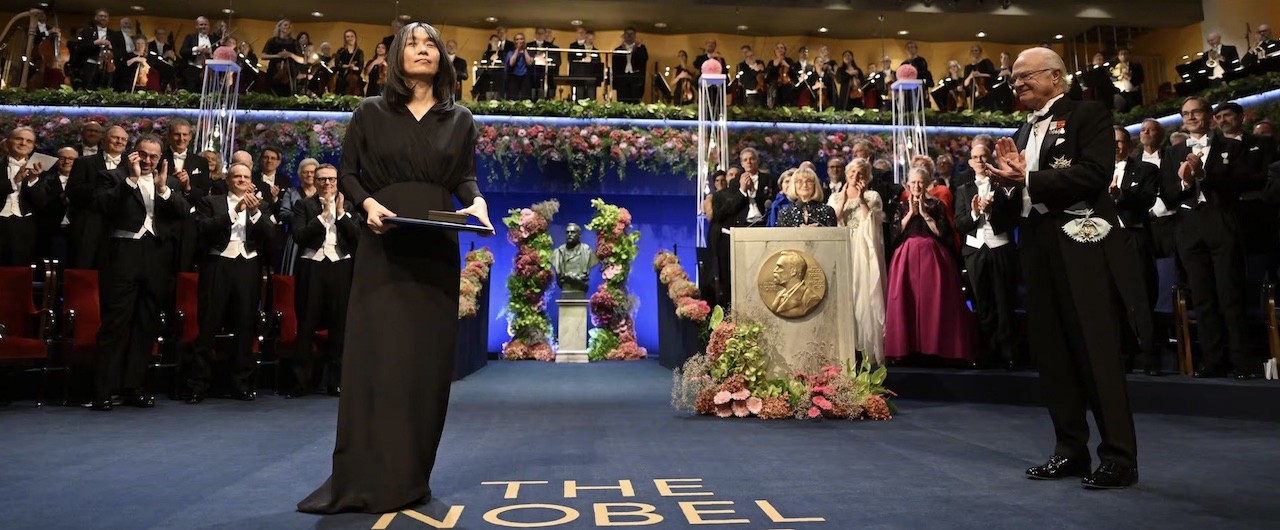
* Han Kang - Nobel Prize in Literature, 2024 (5 books)
HAN KANG (b. 1970) is one of South Korea’s most internationally acclaimed contemporary writers, known for her spare yet haunting prose and her unflinching exploration of violence, identity, and the human condition. Her works often confront the pain that lies beneath ordinary life, asking how individuals and societies process suffering, memory, and the longing for purity or transcendence. Han was the first Asian woman and Korean to be a recipient of the Nobel Prize in Literature, receiving the award in 2024 in recognition of her "intense poetic prose that confronts historical traumas and exposes the fragility of human life".
Han first gained international attention with THE VEGETARIAN (2007), a triptych novel that traces a woman’s decision to stop eating meat and the cascading consequences of that refusal. What begins as a seemingly private, even eccentric choice becomes a radical rejection of social norms, patriarchal control, and embodied violence. Awarded the 2016 Man Booker International Prize, the novel announced Han as a writer capable of turning a minimal premise into a profound philosophical and political inquiry.
If The Vegetarian explores violence inscribed on the body, HUMAN ACTS (2014) confronts violence as historical catastrophe. Centered on the 1980 Gwangju Uprising, a massacre of pro-democracy demonstrators that Han witnessed as a child, the novel moves across voices—victims, survivors, witnesses, and even the dead—to register the long afterlife of state terror. The novel’s restrained, elegiac tone contrasts with the horror it describes, making it both an act of mourning and an ethical inquiry into how collective trauma can—or cannot—be represented in art.
Han’s later fiction deepens her preoccupation with grief, vulnerability, and the porous boundary between life and death. THE WHITE BOOK (2016) blends essay, prose poem, and memoir as the narrator meditates on the color white in the wake of an older sister’s death shortly after birth. In GREEK LESSONS (2011), a woman who has lost her voice forms a fragile bond with a teacher who is losing his sight, their shared muteness opening a space for intimacy beyond speech. Her most recently translated novel, WE DO NOT PART (2021), weaves a narrative about friendship, remembrance, and the fragile boundary between life and loss, asserting that to forget is to abandon those who have already suffered.
Across her oeuvre, Han’s writing is both deeply personal and profoundly universal. Her spare, poetic voice gives shape to what often feels unspeakable—the quiet violence of everyday existence, the persistence of compassion, and the fragile beauty of life itself. For readers new to her work, Han offers not only stories but also an ethical encounter: an invitation to bear witness, to feel, and to reflect on what it means to be human in the face of suffering and transformation.
The following books are in ePUB format:
* Greek Lessons [tr. Smith & Yaewon] (Hogarth, 2023)
* Human Acts [tr. Smith] (Hogarth, 2016)
* The Vegetarian [tr. Smith ] (Hogarth, 2015)
* The White Book [tr. Smith] (Hogarth, 2017)
* We Do Not Part [tr. Yaewon & Morris] (Hogarth, 2025)
Please seed and share with others. ?